

California Needs to Invest in a Healthier Future While Protecting Core CalFresh Benefits Today
With the passage of H.R. 1 and the federal government shutdown that withheld SNAP benefits from hungry Americans on the brink of the holiday season, 2025 pushed our food and nutrition safety net to a more precarious place than ever before.
While SNAP benefits were restored with the conclusion of the government shutdown in November, H.R. 1 will have longer-lasting impacts that threaten food security for Californians across the state. Even prior to these disruptions at the federal level, too many Californians faced uncertainty and hardship when it came to putting food on the table. In fact, according to a recent survey by the Public Policy Institute of California, thirty percent of Californians say they or someone in their household have had to cut back on food to save money in the past year.
Yet, just before Thanksgiving, we saw a different way forward. When CalFresh funds started to flow again, with them came matching dollars for fresh produce purchases through the CalFresh Fruit and Vegetable EBT Program. The program’s return marks its third cycle, as it had shut down operations two previous times because it ran out of funds.
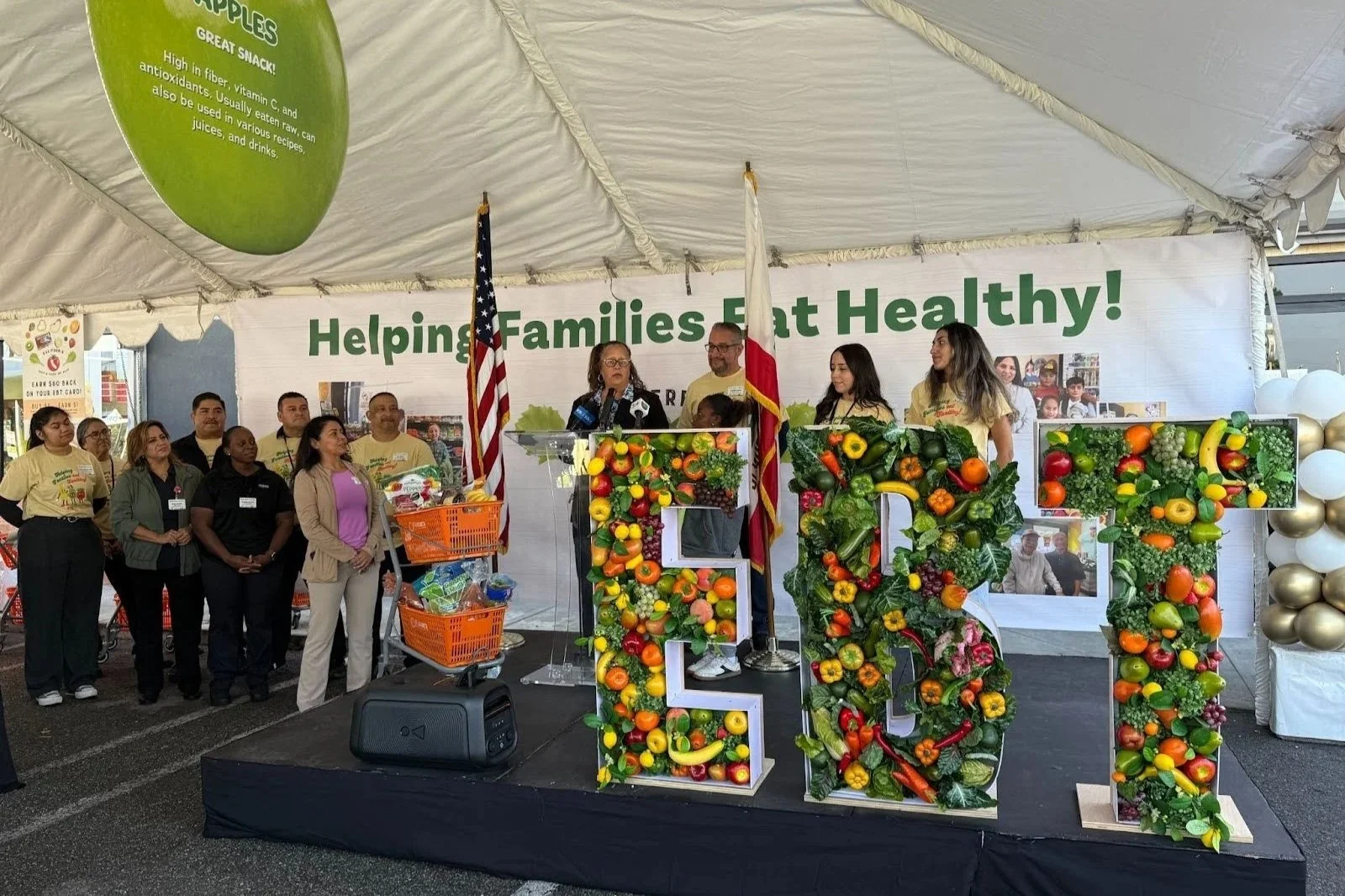
Senator Laura Richardson speaks about the return of the CalFresh Fruit & Vegetable EBT Program at a press conference held at a Mother’s Nutritional Center store in Los Angeles on November 24, 2025.
This program offers CalFresh recipients a dollar-for-dollar instant rebate on fresh fruit and vegetable purchases made at participating locations, up to $60 per month. It is an incredibly popular and efficient way to help people put more food on their tables. In the long run, the Program also helps improve health outcomes and boosts revenue for California’s agricultural sector. Thanks to the leadership of Governor Gavin Newsom, co-champions Assemblymember Alex Lee and Senator Laura Richardson, and many other elected officials, $36M was allocated in last year’s budget to run the program at 92 locations.
Unfortunately, this funding is expected to run out this summer. Without additional investment from the state legislature, tens of thousands of Californians across the state will be left with fewer resources to make ends meet.
Given Governor Newsom’s commitment to securing the state’s nutrition safety net, we hoped to see the inclusion of additional funding for this program in the recently released January budget proposal for fiscal year 2026-2027. The proposal rightfully includes resources to mitigate the significantly increased costs to California for CalFresh implementation — fallout from policy changes passed in H.R. 1 last summer. Those investments will plug gaps and ensure that as many qualified Californians as possible continue to receive benefits. In other words, they will keep the lights on.
Yet in the long run, we know that keeping the lights on is not enough. In fact, even prior to H.R. 1, CalFresh benefits were insufficient to meet the nutrition needs of too many Californians. Investing in the CalFresh Fruit and Vegetable EBT Program is an opportunity to turn the lights up by helping build a more robust nutrition safety net that better addresses hunger and prioritizes the health and wellbeing of Californians.
Amid historically high food costs that continue to strain families’ budgets, the CalFresh Fruit and Vegetable EBT Program deserves an influx of resources to ensure that it can both continue operating at current retailers and expand to reach even more CalFresh families beyond summer 2026. We are calling on the Newsom Administration to invest $100M in the 2026-2027 state budget, providing an essential benefit boost to help make healthy, nourishing food more affordable.